The Less They Give, the More We Want: Decoding the Quiet Power of Celebrities Who Play Hard to Get
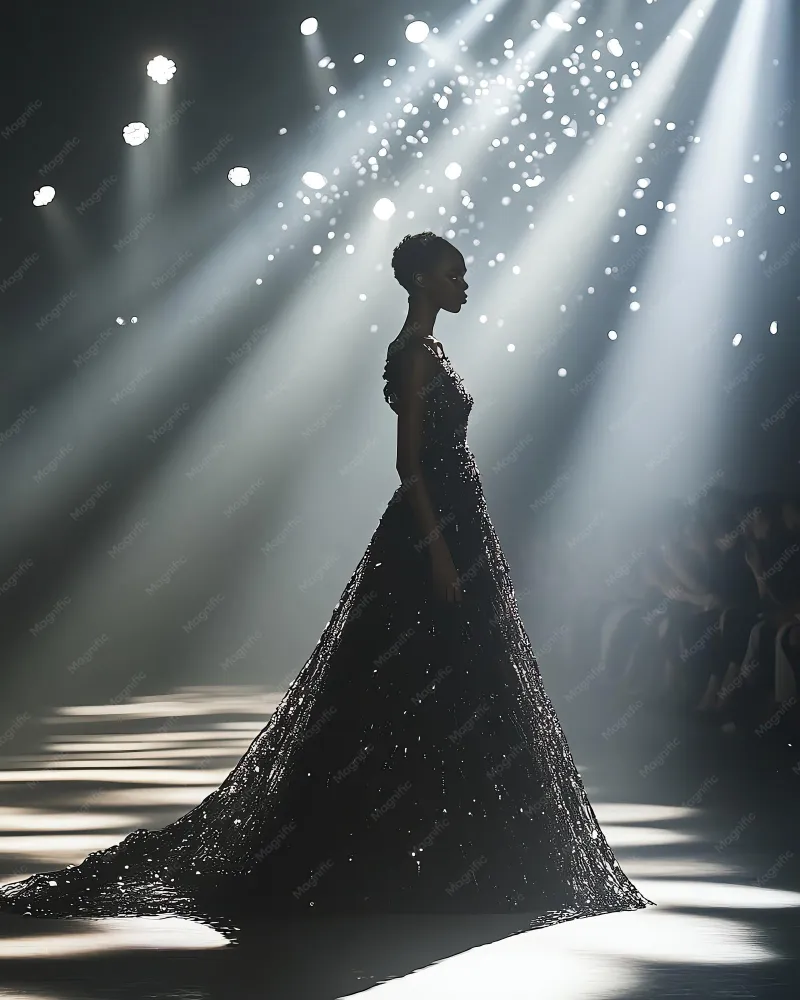
Photo: mysterious elegant celebrity silhouette dramatic lighting glamour, via img.freepik.com
There's a certain kind of celebrity who doesn't need to try very hard. You know the type. They're not flooding Instagram with thirst traps every forty-eight hours. They're not booking every press junket, every late-night couch, every brand deal that slides into their DMs. And yet — somehow, impossibly — they are the ones you cannot stop thinking about.
It's maddening. It's also completely intentional.
The entertainment industry rewards loudness. Visibility is currency. Constant content is the grind. So why do certain stars opt out of the noise entirely — and somehow end up more desirable for it? The answer lives somewhere in the overlap between psychology, aesthetics, and the oldest trick in the book: making someone want what they can't quite have.
The Scarcity Effect Is Real, and It's Absolutely Working on You
Economists talk about scarcity driving value. Marketers have built entire empires on the principle. But nowhere does it hit harder than in the way we process celebrity attraction.
When a star is everywhere — every podcast, every red carpet, every sponsored post — our brains eventually start filing them under "ambient noise." Familiarity is comfortable. It is not, however, particularly sexy. Desire requires a gap. A space between what you have and what you want. Constant availability closes that gap entirely.
Contrast that with the celebrity who surfaces twice a year, looking absolutely devastating, says something cryptic in an interview, and then vanishes again. Your brain doesn't get to resolve the tension. It just keeps generating interest, keeps filling in blanks, keeps imagining. That unresolved loop? That's the entire engine of obsession.
Psychologists call it the Zeigarnik effect — the tendency for incomplete experiences to occupy more mental real estate than completed ones. Applied to celebrity culture, it means the star who never quite gives you everything is the one who lives rent-free in your head the longest.
Selective Visibility as a Power Move
Let's be honest about what's actually happening when a major celebrity pulls back from public life. It rarely looks like retreat. It looks like control.
Think about the stars who have mastered this. The ones who skip the press circuit but show up to one specific event, photographed from one specific angle, wearing something that breaks the internet by noon. The ones who give a single interview every eighteen months and somehow manage to say something that gets quoted for years. The ones whose social media presence is so curated, so deliberate, that every post feels like an event rather than noise.
That's not passivity. That's strategy executed at the highest level.
There's a certain kind of effortless that takes enormous effort to maintain. The restraint required to not post, not comment, not respond — in a culture that rewards constant reaction — is genuinely difficult. The celebrities who pull it off understand something fundamental: mystery is not the absence of personality. It's the careful management of how much personality you reveal, and when.
Why the Quiet Ones Feel Hotter
Here's where it gets interesting from a purely visceral standpoint, which — let's be real — is very much what we're here for.
Attraction is not just about what's presented. It's about what's withheld. The suggestion of something more. The sense that there are layers you haven't accessed yet. When a celebrity over-shares, over-explains, over-performs their own appeal, it flattens them. You see the whole picture. There's nothing left to discover.
But the star who gives you just enough? Who shows up looking like that, says something just ambiguous enough to keep you guessing, and then disappears back into their life? They feel three-dimensional in a way that constant content creators often don't. They feel like a real person with a real interior — and that is, weirdly, incredibly attractive.
It also helps that restraint reads as confidence. And confidence, as we've covered before on this site, is basically the universal solvent of attraction. Someone who doesn't need your attention — who isn't performing for your approval — signals something powerful about their own sense of self. That signal is deeply, almost embarrassingly appealing.
The Paradox of the Untouchable
Here's the twist that makes all of this genuinely fascinating: the celebrities who feel most untouchable are often the most desired. Not despite their distance, but because of it.
There's a specific category of star — think the kind of actor who does one prestige film every few years, or the musician who drops an album with zero warning and then goes completely dark — who occupies a particular place in the cultural imagination. They feel elevated. Not in a cold or arrogant way, but in the way that rare things feel elevated. You don't take them for granted because you've never had the chance to.
This untouchable quality isn't about being literally unavailable. It's about existing on a slightly different frequency than the rest of the noise. When they do appear, it means something. When they speak, people actually listen. When they show up somewhere, it's an event — not just another data point in a relentless content feed.
And that elevation? It has a direct line to desire. We want what feels exceptional. We crave what doesn't feel ordinary. The celebrity who has successfully positioned themselves as genuinely rare has essentially hacked the most basic wiring of human attraction.
What You Can Actually Take From This
Beyond the celebrity analysis — and yes, we know you come here partly to think about specific famous people in very specific ways — there's something genuinely applicable in all of this.
The most magnetic people in any room are rarely the loudest ones. They're the ones who seem completely at ease with saying less, doing less, performing less. They don't chase attention. They let it come to them, and then they manage it deliberately.
In a world that is aggressively optimized for maximum output, maximum visibility, maximum engagement — restraint has become genuinely countercultural. And countercultural, as history keeps proving, tends to be very, very attractive.
So the next time you find yourself completely preoccupied with a celebrity who barely seems to acknowledge your existence — who posts once a month, gives nothing away in interviews, and still somehow lives in the back of your mind — don't be embarrassed about it.
You're not weak. You're just human. And they're very, very good at what they do.
The untouchable ones always are.